
According to a stark warning from Born Free, a conservation charity, tigers may vanish from the wild within the next decade if swift action isn’t taken.
The organization has reported that the wild tiger population has plummeted by 96% over the last century due to poaching and habitat destruction.

Only about 4,000 tigers remain in the wild, and Born Free has launched an urgent global appeal to protect the species.
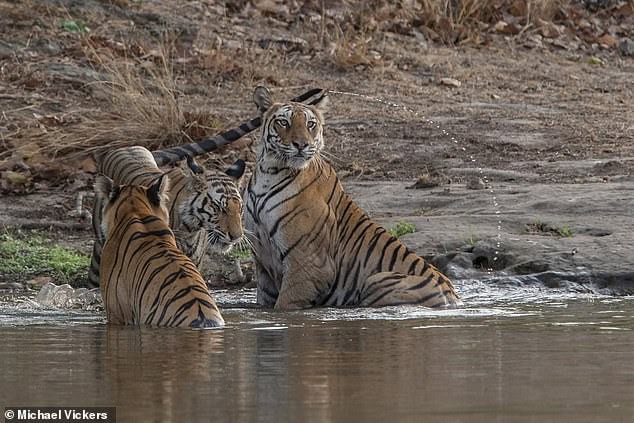
Partnering with seven Indian non-governmental organizations (NGOs), the charity focuses on preserving tiger populations, particularly in India’s Satpuda region, home to more than 500 of the country’s estimated 2,000 wild tigers.

The main goals of these efforts include addressing the poaching crisis, safeguarding tiger habitats, and promoting conservation strategies that help both wildlife and local communities coexist.
Howard Jones, the CEO of Born Free, highlighted the significant threats facing tigers, including human-wildlife conflicts and poaching for illegal trade in tiger body parts, which are often used in traditional medicine.
He also stressed that habitat loss, driven by deforestation and poorly planned rural development, puts tigers at greater risk.
“It’s hard to imagine a world without tigers,” Jones stated. “But if we don’t act quickly, the future looks grim. Our Living with Tigers initiative encourages peaceful coexistence between people and wildlife by educating communities and involving them in projects to improve their livelihoods.”
Born Free notes that 85% of human-tiger conflicts occur when people enter forests, infringing on the animals’ natural territory.
Habitat encroachment caused by expanding urban areas remains a major challenge in ensuring the species’ survival.
The existence of natural corridors, which allow tigers and other wildlife to migrate across large areas, is critical for maintaining healthy population numbers. Losing these corridors could lead to a devastating collapse in tiger populations.
Kishor Rithe, Founder of the Satpuda Foundation and a partner in Born Free’s Living with Tigers initiative, emphasized the need for ecological considerations in infrastructure projects.
“Canals, roads, railways, and transmission lines are being proposed across critical landscapes,” he explained. “It’s vital that agencies responsible for these projects include plans to mitigate their impact on wildlife.”
This collective call to action underscores the urgency of addressing the threats to one of the planet’s most iconic species before it’s too late.
Read more Wildlife News.


