
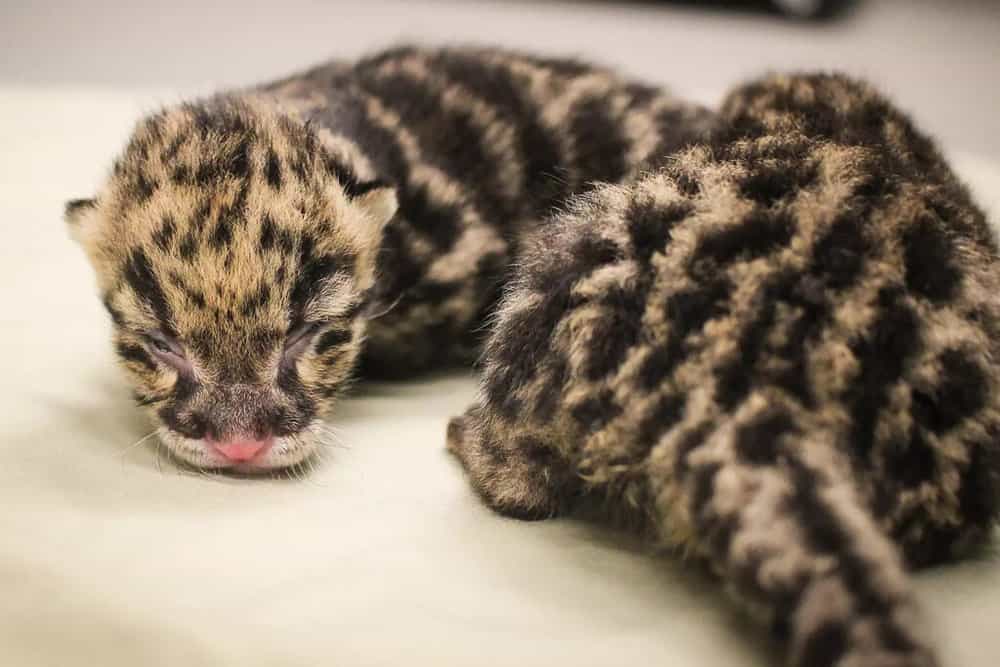
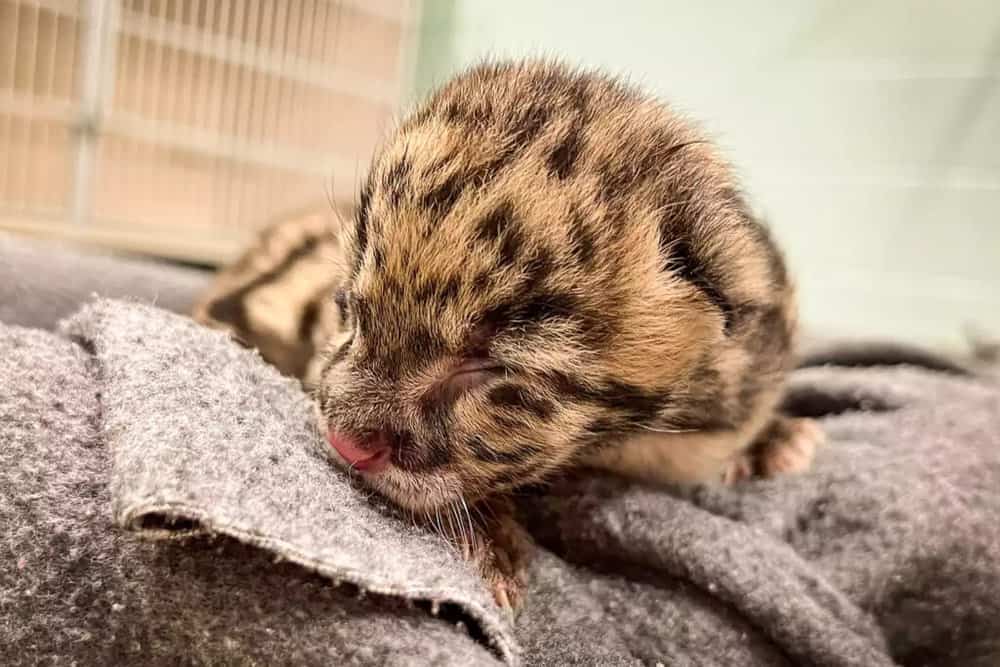
Nashville Zoo welcomed two adorable clouded leopard cubs into the world on June 30, adding to the excitement of visitors and conservation efforts alike.
Proud parents Jewels and Bruce introduced a male and a female cub to their family, marking a significant moment for the Tennessee Zoo.
If you prefer not to read the full story,
Skip ahead to watch the video ->
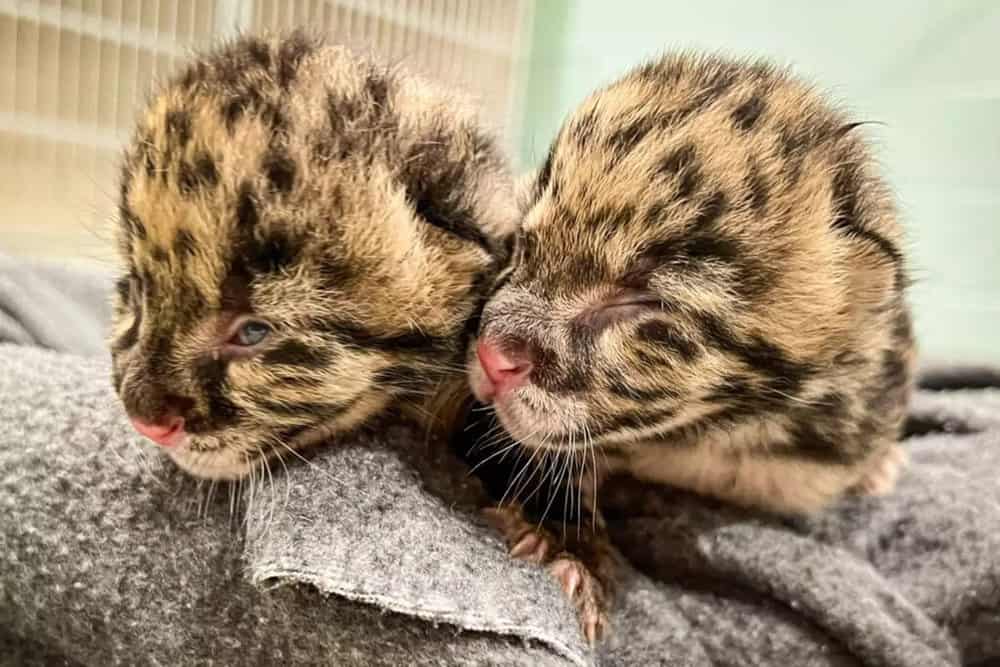
These tiny felines made a grand entrance, weighing about half a pound at birth and measuring approximately four inches.
The birth of these cubs marks the first time clouded leopard cubs have been born at the zoo since 2019, breaking a drought in births after a period of consistent arrivals.
Over the past decade, Nashville Zoo celebrated the birth of 40 clouded leopard cubs, making them an essential part of the zoo’s conservation efforts.
Clouded leopards are native to the lush tropical rainforests of Nepal, Bhutan, India, Myanmar, and China, primarily inhabiting Southeast Asia.
Classified as vulnerable by the International Union for Conservation of Nature, they face threats like deforestation, poaching, and the exotic pet trade.
The recent arrival of these two cubs boosts Nashville Zoo’s clouded leopard population to 16 and marks the successful reproduction of Jewels and Bruce.
The Species Survival Plan facilitated pairing these three-year-old clouded leopards, focusing on their compatible genetics to aid in the conservation and advanced veterinary care of vulnerable and endangered species in captivity.
To ensure the cubs’ best chance at survival, Nashville Zoo’s veterinary team is hand-rearing them. Based on the zoo’s extensive experience caring for clouded leopards, this method is safer than having the mother raise them.
According to a Facebook post by the zoo, hand-rearing prevents parental predation and neglect, which are common challenges for clouded leopards, and boasts a near 100% survival rate for cubs raised this way.
Moreover, hand-raising provides a better quality of life for the cats under human care. It helps acclimate this typically nervous species to human sights and sounds and allows cubs to be paired with their future mates early, fostering stronger bonds and more successful breeding.
These efforts are crucial in conserving this endangered species, aligning with Nashville Zoo’s commitment to wildlife preservation and education.
Watch the video below:
Read more Wildlife News.


