Two charming jaguar cubs, born just five weeks ago, have quickly become the highlight of a wildlife park near Mexico City.
Their captivating antics delight visitors and serve as a platform for important conservation discussions.
If you prefer not to read the full story,
Skip ahead to watch the video ->
The female cubs, who have not yet been named, were separated from their mother at 18 days old due to a concerning skin condition.
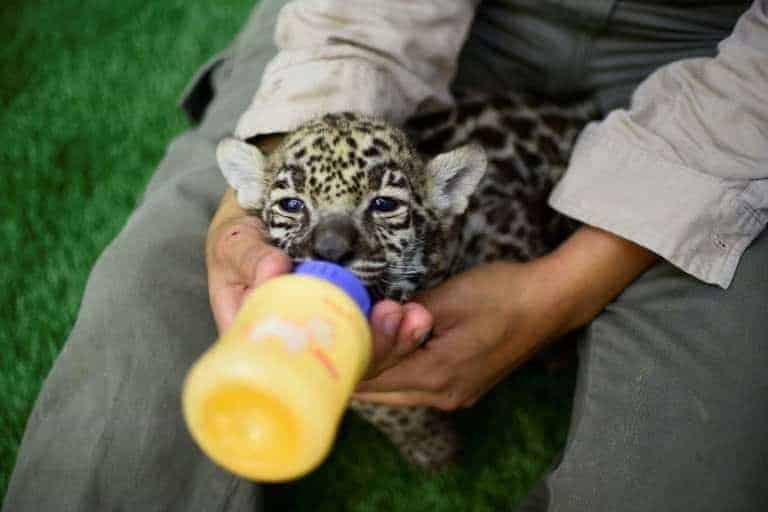
Caretakers at Animal Kingdom in San Juan Teotihuacan decided it was best for the cubs to be cared for separately to avoid any risk to their safety; returning them to their mother could provoke her protective instincts, potentially leading to harm.
Now, under the care of their human caretakers, the cubs enjoy bottle-feeding and exploring their enclosure, displaying playful behavior despite their cautiousness.
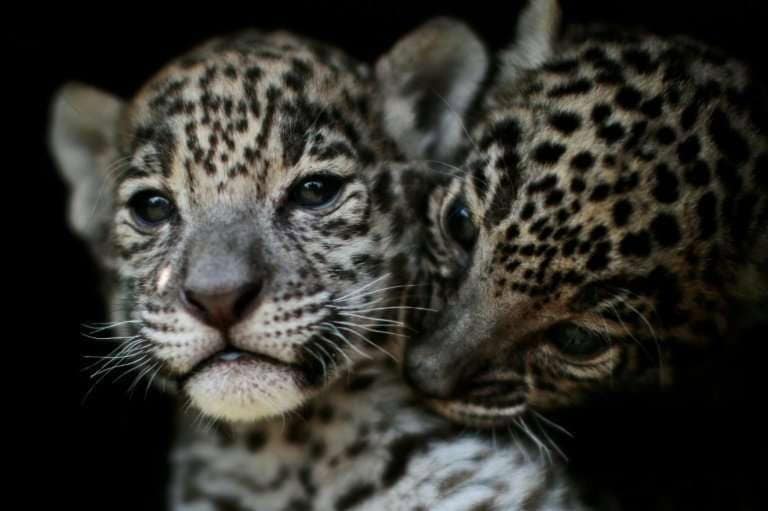
Their oversized paws and innocent curiosity may make it hard to imagine that they will soon grow into formidable adults—female jaguars typically reach around 50 kilograms (110 pounds).
In comparison, males can weigh as much as 80 kilograms (175 pounds), with some exceeding 150 kilograms (330 pounds).
Jaguars are the largest cats in the Americas and the third-largest globally, following lions and tigers. Their hunting prowess is notable; as Jose Luis Gonzalez, the wildlife manager at the park, describes, they are “very precise killers.”

Gonzalez reflects on the impactful experience of getting close to these magnificent animals, stating, “Seeing them up close, hearing them, smelling them, touching them. You can never forget that; it awakens you to something bigger.”
Animal Kingdom aims to use the popularity of these jaguar cubs to educate visitors, particularly children, about the significance of conservation.
Gonzalez highlights the necessity of instilling knowledge in the younger generation, as they will be responsible for the future of these species and the planet.
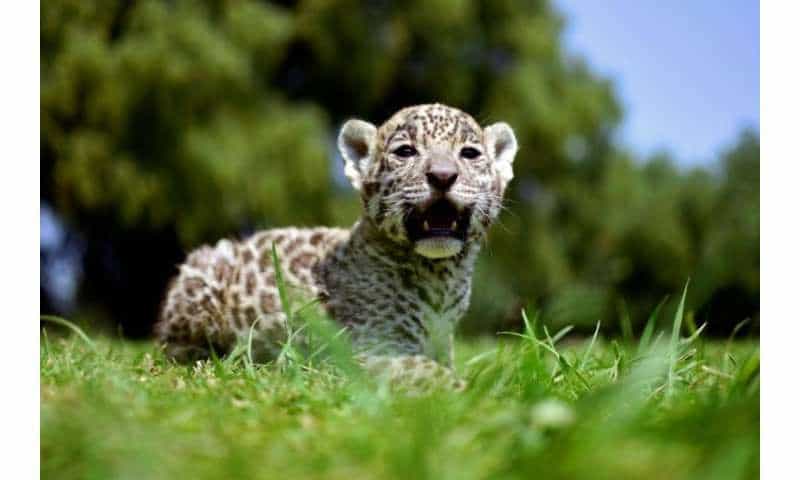
The International Union for Conservation of Nature classifies jaguars as a “near-threatened” species, with their population decreasing by approximately 25% over the last twenty years.
Read more Wildlife News.