The rise in the Asiatic lion population in Gujarat’s forests is an achievement worth celebrating. The local communities of the Saurashtra region deserve credit for their role in protecting and nurturing these wild cats.
However, the growing number of lions—523 in 2015, up from 411 in 2010—presents a significant conservation challenge. While the population growth is impressive, the 2015 census reveals troubling details.
Only a slight increase of 4.4% (14 lions) was found within the sanctuary and protected forest areas, whereas a staggering 130% rise (96 lions) was recorded in areas dominated by human activity.
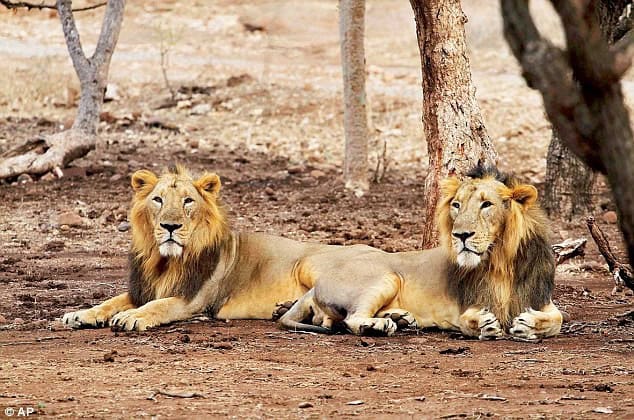
Renowned wildlife expert Ravi Chellam, who has extensively studied Gir lions, acknowledges local people’s crucial role in the lions’ survival and growth.
But he cautions that expanding the lion population outside protected areas into human-inhabited landscapes is unsustainable.
Chellam stresses that the Supreme Court’s directive to relocate some lions remains valid and should be acted upon.
The dispersal of lions beyond protected areas, driven by their need for prey and water, has had deadly consequences.
In the past year alone, 14 lions were killed in accidents, including 10 by trains. Forest officials attribute these incidents to overcrowding, as the protected areas only support about 260 lions.
“This rapid increase in lions outside the sanctuary is a ticking time bomb,” warns H.S. Singh, a National Board for Wildlife member and a veteran forest officer in Gujarat.
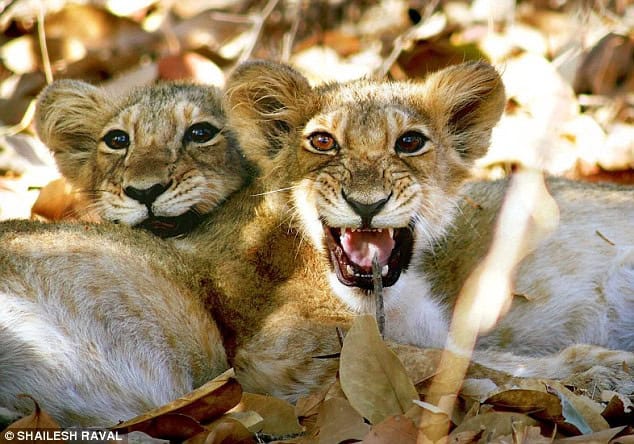
He highlights the enormous challenge of creating new habitats with adequate prey and water while managing the growing conflicts between humans and lions.
Singh’s concerns are backed by the grim reality: 258 lions have died from accidents and natural causes since the last census in 2010.
A senior official, speaking anonymously due to the issue’s political sensitivity, emphasized the urgency of relocating some lions to avoid more casualties. The state, however, has resisted this move, viewing the lions as a symbol of pride.
The increasing number of deaths is a clear sign of the intensifying conflict between lions and human populations, which is likely to worsen.
High-speed railway lines, particularly those leading to Pipavav Port in the Amreli district, where the lion population has grown the most, and five state highways cutting through the forests only add to the dangers faced by the lions.
This growing conflict highlights the need for a sustainable solution to manage the expanding lion population and protect the region’s wildlife and human communities.
Read more Wildlife News.